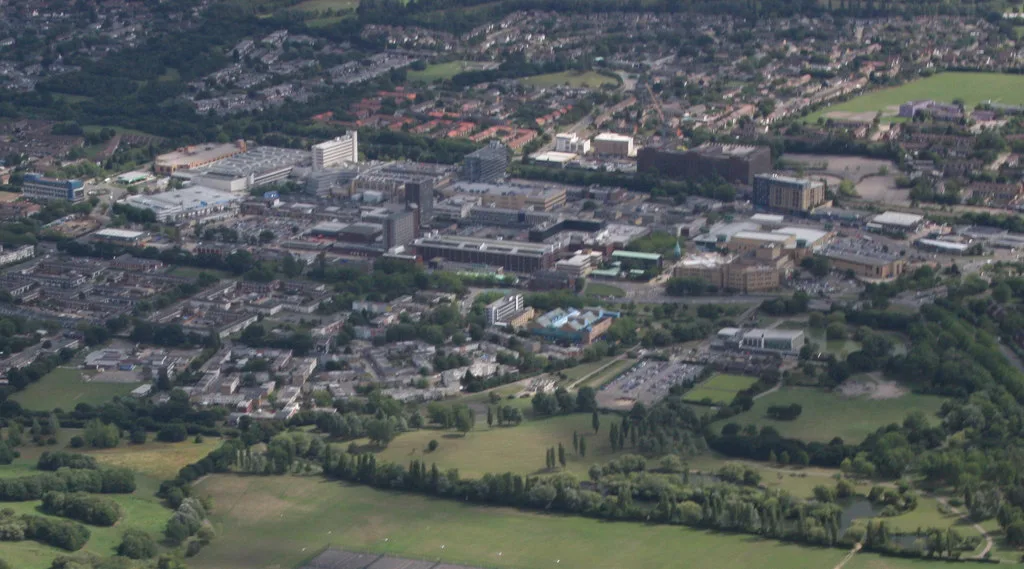

The government has ordered Basildon to open its Local Plan consultation by 10 August and submit by 31 December. The 26,909 homes, and why it came to this.
Basildon borough is one of five councils in England that has never adopted a Local Plan under the law that has governed plan-making since 2004, and the only one of those five that has not even submitted a plan for examination. The plan it does have was adopted in March 1998, altered in September 1999 and is now over 27 years old.
On 21 July 2026 the government stopped waiting. The Minister of State for Housing and Planning, Matthew Pennycook, wrote to the council’s leader using the Secretary of State’s intervention powers and directed Basildon to put its emerging Local Plan out to public consultation by no later than 10 August 2026 and to submit it for examination by no later than 31 December 2026.
This page sets out what was ordered, what the plan actually proposes, where the homes would go, and what happens next. Everything here comes from the government’s own letter or the council’s own documents.
What the minister directed
The letter went to Cllr Andy Barnes, Leader of Basildon Borough Council, and was issued under section 27(2)(b) of the Planning and Compulsory Purchase Act 2004, which lets the Secretary of State step in where a council is “failing or omitting to do anything it is necessary for them to do” on its Local Plan. The five directions are:
- Start the Regulation 19 consultation on the emerging plan that went to Cabinet on 23 July, by no later than 10 August 2026, and run it for a minimum of six weeks.
- Submit the plan for examination by no later than 31 December 2026, with any minor modifications needed after considering the consultation responses. If the modifications would be more significant, that must be reported to the Secretary of State so further action can be considered.
- Take no step to withdraw the plan, and report monthly to the minister’s officials on progress.
- Progress the plan to the end of the examination process.
- Under section 15(4) of the same Act, publish a revised Local Development Scheme by no later than 10 August containing both of those milestones.
The council was given until 4 August to set out any exceptional circumstances suggesting intervention was not appropriate. The letter is explicit that doing so “neither alters nor removes the direction”. The directions stay in force until the Secretary of State withdraws them, and the letter warns that failure to comply, or failure to make sufficient progress towards the December deadline, will mean “further action” (Basildon Borough Council local plan intervention letter, GOV.UK).
As of 9 August 2026, the council had published nothing announcing the Regulation 19 consultation. Its press release index runs into August 2026 with no Local Plan item, and its own Local Plan news and updates page still ends at 28 November 2025.
Why the government intervened
The letter sets out the case in two parts, and the numbers in it are worth reading in full because they are the reason the borough has lost control of the timetable.
On plan progress. The last Basildon Local Plan was adopted in 1998 with alterations in 1999. The council has never adopted one under the 2004 Act. It is “one of only five authorities without an adopted plan under the 2004 Act, and the only authority in this group that has not submitted its current emerging plan for examination”. The council’s own Local Development Scheme, published in October 2025, scheduled the Regulation 19 consultation for winter 2025/26 and submission in spring 2026. Both milestones were missed, leaving the council at least five months behind its own timetable, and it did not intend to take the Regulation 19 plan to Full Council until at least September 2026.
On development needs. Basildon’s Housing Delivery Test score was 35% in 2023, which the minister describes as “among the poorest performers nationally”. The council’s own consultation material puts it more bluntly: the borough delivered only 35% of the minimum homes needed, which “puts Basildon Borough in the lowest 10 local authorities for housing delivery”. The council cannot demonstrate a five-year housing land supply, and the most recently published figure was 1.96 years. The 2025 affordability ratio for the area was 9.66, well above the England average.
There is a deadline behind all of this. 31 December 2026 is the cut-off for plans to be submitted under the current plan-making system. Miss it and Basildon would have to restart under the new system, delaying adoption further and, as the letter puts it, “potentially leaving the Council as the only authority in the country never to have adopted a local plan under the Planning and Compulsory Purchase Act 2004”.
The minister also notes that the previous Conservative administration “failed to adopt a plan when they had the opportunity to do so in 2022”, and that the current council has “stated its opposition to the standard method and to progressing a plan that meets housing need in full”.
The number everyone argues about: 26,909 homes
The housing figure in the plan is not a political choice. It is the output of a national formula, and the council sets out its own arithmetic in its Regulation 18 consultation FAQ:
In the council’s own words: the baseline is 0.8% of the borough’s existing housing stock, which is 642 homes; that is multiplied by an affordability adjustment of 2.0013 to give 1,285 dwellings a year; and a 20% buffer is added because delivery over the last three years has been far below the minimum, giving 1,542 dwellings a year.
Over the plan period the minimum requirement breaks down as 2,494 homes for April 2023 to March 2025, 7,710 for April 2025 to March 2029 and 16,705 for April 2029 to March 2043: 26,909 in total. The draft plan makes provision for a maximum of around 28,250 homes, deliberately more than the minimum, because over twenty years some sites will deliver fewer homes than predicted or stop being available at all. A small windfall allowance of 378 homes is assumed after 2040 (Regulation 18 Part 3 FAQs).
The Green Belt question
The council does not pretend this can be done on brownfield land. It has reviewed all available urban land in the borough, looked at increasing density in sustainable locations including Basildon town centre, and asked other Essex authorities whether they could take some of the growth. Its conclusion, in its own consultation material, is that meeting a five-year land supply “is not possible without altering the green belt boundaries”.
A 2025 Green Belt Study, which supersedes the council’s previous studies, informs where those boundaries would move. The December 2024 revision of the National Planning Policy Framework also introduced the concept of grey belt, meaning parts of the Green Belt that are already built up or of low quality and may be suitable for development where that would not significantly undermine the five purposes of Green Belt. That definition is doing a lot of work in this plan.
Where the homes would go
The Regulation 18 Part 3 draft made some notable changes to the sites carried forward. Three previously “alternative” sites were brought into the plan:
- H33, Land East of Bowers Gifford: provisionally identified for 800 to 850 homes, the largest of the three by a wide margin.
- H32, Potash Road: provisionally identified for 75 to 100 homes.
- H31, Land at Mountnessing Road (Billericay): provisionally identified for 15 to 25 homes.
Three sites that had appeared in the previous Regulation 18 consultation were recommended for removal: H5, land adjacent to Laindon Common Road; H14, land south of London Road, Basildon; and H16, Fairmead Plotlands. A fourth alternative site was recommended not to be identified for housing at all.
An important caveat from the council: the sites in the draft plan are not yet allocated. They were suggested by landowners at early stages, refined using consultation feedback and technical evidence, and will go through another round of assessment. Regulation 19 is the version the council proposes to submit, so the Regulation 19 site list is the one that matters.
How to have your say, and what it is for
The Regulation 19 stage is not a general opinion survey, and this catches people out. Earlier consultations asked what you thought of the proposals. Regulation 19 asks a narrower question: whether the plan is legally compliant and whether it meets the tests of soundness in the National Planning Policy Framework. Comments framed against those tests carry weight at examination; comments that simply oppose the housing number generally do not, because the number comes from a national formula.
The consultation must run for at least six weeks from a start no later than 10 August 2026. When it opens it will be published on the council’s Local Plan pages, and the previous round was hosted on a separate Commonplace platform rather than on the council’s own site. The planning policy team can be reached at LocalPlan@basildon.gov.uk or 01268 533333.
Note also that comments are published with your name attached. The council is required by law to make representations publicly available including the name of the person who made them; telephone numbers, addresses, email addresses and signatures are not published, and comments cannot be marked private or confidential.
Other planning news in the borough
Eastgate Health Centre, Basildon town centre. Walls are up and mechanical and electrical services are being installed on the new health centre at Eastgate Shopping Centre, which the council expects to be fully operational by the end of 2026 or in early 2027. It is planned to provide minor surgery, endoscopy and ophthalmology, major surgery including knee and hip replacements, MRI and CT diagnostic suites, theatre rooms, recovery areas and inpatient beds (Basildon Borough Council).
Key Cottage, Oak Road, Billericay. A planning inspector appointed by the Secretary of State opened a public inquiry at 10am on Tuesday 21 April 2026 at The Basildon Centre into appeals by Mr Gary Sands against four enforcement notices the council served on 13 November 2025. The notices allege unauthorised changes of use including vehicle repair and maintenance and the stationing of a caravan for residential use, plus unauthorised buildings and hardstanding. The Planning Inspectorate references are APP/V1505/C/25/3376566, 3376567, 3375312 and 3375314, and the inspector’s decision will be published by the Planning Inspectorate (Basildon Borough Council).
£40 million of Pride in Place money. Consultation is open on how the government’s £40 million Pride in Place investment is spent in Lee Chapel North and Laindon Central and in Chalvedon. The funding is already secured and is overseen by two independent Neighbourhood Boards, with Basildon Council as the accountable body (Basildon Borough Council).
Checking a planning application near you
Every application in the borough is on the council’s Public Access planning register, which is searchable by address, postcode, application reference or by the week an application was validated: publicaccess.basildon.gov.uk. Applications determined in the meantime are still being decided against the 1998 Saved Policies, reviewed for compliance against the 2024 National Planning Policy Framework in March 2025, which is precisely the situation the new plan is meant to end (adopted Local Plan).
Frequently asked questions
Has the government taken over Basildon’s Local Plan?
Not taken over, but directed. On 21 July 2026 the Minister of State for Housing and Planning used section 27(2)(b) of the Planning and Compulsory Purchase Act 2004 to order the council to open its Regulation 19 consultation by 10 August 2026, submit the plan by 31 December 2026, not withdraw it, report monthly on progress and carry it through examination. The council still runs the process; it no longer controls the timetable.
How many homes does the Basildon Local Plan propose?
The minimum requirement over the 2023 to 2043 plan period is 26,909 homes, which is 1,542 a year. The plan makes provision for a maximum of around 28,250 to allow for sites that under-deliver or fall away.
Why is Basildon’s housing target so high?
Because of the affordability adjustment in the national standard method. The baseline is 0.8% of existing stock, or 642 homes a year. Because the average local home costs 10.27 times the average local wage, that is multiplied by 2.0013 to give 1,285, and a 20% buffer for three years of under-delivery takes it to 1,542.
When was Basildon’s current Local Plan adopted?
March 1998, with alterations in September 1999. The Saved Policies from that plan were approved by a Secretary of State direction on 20 September 2007 and are still what planning applications are decided against.
Will Basildon’s Green Belt be built on?
The council’s own position is that a five-year housing land supply “is not possible without altering the green belt boundaries”. A 2025 Green Belt Study informs where. The exact boundaries are what the Regulation 19 consultation is about.
What happens if the council misses the 31 December deadline?
Plan preparation would have to restart under the new plan-making system, delaying adoption further. The minister’s letter also says he will “consider taking further action” if the council fails to comply or to make sufficient progress.
Where do I check a planning application in Basildon?
On the council’s Public Access register at publicaccess.basildon.gov.uk, searchable by address, postcode, reference or validation week.
Related
- Basildon house prices: the 10.27 times local earnings figure that drives the housing number, and what homes in each postcode actually sell for.
- Basildon roadworks and travel: the A127 and A13 schemes that would have to carry any new development.
- Things to do in Basildon, including the country parks the council bought rather than build on.
Sources
- Basildon Borough Council local plan intervention letter, 21 July 2026 (GOV.UK) for the five directions, the deadlines, the Housing Delivery Test score, the 1.96-year land supply, the 9.66 affordability ratio and the five-authority comparison.
- Basildon Borough Local Plan 2023-2043, Regulation 18 Part 3 Frequently Asked Questions (Basildon Borough Council) for the standard method arithmetic, the plan-period totals, the maximum provision, the windfall allowance, the Green Belt and grey belt position, the site changes and how representations are handled.
- Basildon Borough Council: adopted Local Plan for the 1998 adoption, the 1999 alterations, the 2007 Saved Policies direction and the March 2025 compliance review.
- Basildon Borough Council: Local Plan latest news and updates and Emerging Local Plan for the published position as at 9 August 2026.
- Basildon Borough Council: major new health centre takes shape at Eastgate, date set for Public Inquiry and £40 million Pride in Place consultation.
- Basildon Public Access planning register for individual applications.
Position as at 9 August 2026. The Regulation 19 consultation was directed to open by 10 August; check the council’s Local Plan pages for the live consultation and its closing date.
Have your say