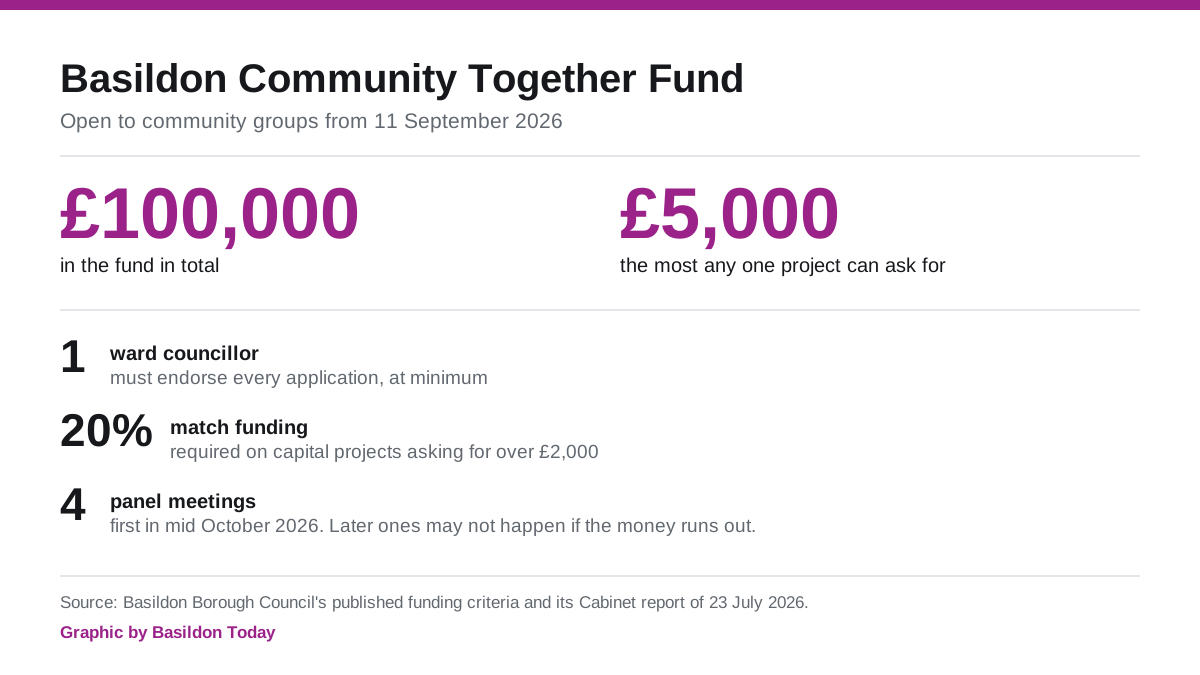

Basildon groups can apply for up to £5,000 from a new £100,000 fund. Every bid needs a ward councillor's backing, and the first panel sits in mid October.
Community groups across Basildon borough can now apply for grants of up to £5,000 from a new £100,000 council fund. The Basildon Community Together Fund opened on 11 September, and the first panel to hand any of it out sits in mid October.
Two things about it are worth knowing before you start writing an application. Every bid needs a ward councillor to put their name to it. And the money is not new money: it comes out of the budget that used to run the borough’s Area Committees, which wound up in May.
What you can ask for
The fund is open to constituted community groups, charities, voluntary organisations, Community Interest Companies, social enterprises and other not-for-profit organisations delivering a benefit to borough residents. Priority, the council says, goes to grassroots organisations and groups working closest to local need (Basildon Borough Council).
The rules that will decide most applications are these:
- £5,000 is the maximum for any one project. Revenue, capital or a mix of the two.
- Capital projects asking for more than £2,000 must put in at least 20% themselves, and evidence it. The council defines capital as buying, building or significantly improving a physical asset; everything else counts as revenue.
- Projects must support at least one of six Community Resilience objectives: getting everyone involved, respecting and including everyone, fair chances for work and money, bringing people together, making Basildon safer and building trust, and helping people stay healthy and happy.
- If you are contributing to a bigger project, you must already have all the rest of the money in place, and prove it.
The fund will pay for events, equipment, materials, volunteer expenses, activities and improvements to community buildings. Parents and teacher associations can apply even though schools themselves cannot.
What it will not pay for, and this list matters
The exclusions rule out several things people will assume are covered:
- Public realm improvements, including work to streets, pavements, public squares, parks and other publicly maintained spaces. If your idea is to fix something in a park, this is not the fund for it.
- Ongoing maintenance, organisational overheads and routine running costs.
- Anything that has already happened. The council will not consider applications for activity, works or purchases made before the funding is awarded.
- Projects promoting political or religious activity, and projects benefiting only a small number of individuals.
There is also a bar that will catch some of the groups most likely to apply. Any organisation that received a grant from Basildon Council, including from the Area Committees, in the previous 12 months cannot apply, counted from the date the grant was paid. The Area Committees ran until May, so a group funded by one shortly before they closed is locked out of this fund for most of its first year.
Organisations based outside the borough can apply, provided the project is delivered in Basildon borough and the benefit is solely for its residents.
Every application needs a councillor
This is the part the council’s public pages mention only in passing, and it will shape which projects get funded.
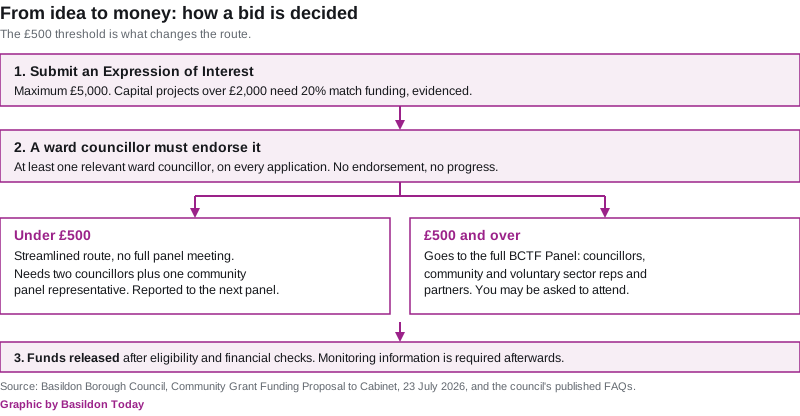
Every Expression of Interest must be endorsed by at least one relevant ward councillor before it goes anywhere. For the fast route, used for requests under £500, the Cabinet report is more specific still: those need endorsement from two councillors and one community panel representative, after which they can be approved without going to a full panel meeting, with every such decision reported back as a standing item at the next one.
Anything from £500 upwards goes to the Basildon Community Together Fund Panel, and applicants may be invited to attend to answer questions. The panel is made up of elected members including a designated chair, community and voluntary sector representatives, and what the council calls system leaders. Panel members were recruited through an open call over the summer for an unpaid voluntary role.
A council Community Development Officer is meant to smooth this: the report says the officer will liaise with ward councillors to secure the endorsements, help groups refine applications, check eligibility before submission and broker partnerships. Groups that do not already know their councillor can ask the Communities Team for help on 01268 208155 or at CommunitiesTeam@basildon.gov.uk.
Where the £100,000 comes from, and the £40,000 gap
The press release does not say where the money is from. The Cabinet report does.
Basildon’s Area Committees “concluded in May”, the report says, and the new fund is paid for out of the budget those committees used to spend. That budget has other calls on it. It also “will continue to fund the Pride Teams and Crunch programme, which were historically supported through Area Committee funding”.
The report then sets out the consequence in a single sentence:
“Based on current estimates, there will be a funding shortfall of approximately £40,000. This shortfall will be met through the realignment of Member Investment budgets in 2026/7 and addressed in future years as part of the budget-setting process.”
In other words, the £100,000 headline is roughly £40,000 more than the old pot stretches to once the Pride Teams and the Crunch are paid for, and the difference is being found by moving Member Investment money across this year and dealing with it at budget-setting in future years. That is being decided against a background of a council forecasting a £3.4m overspend on its day to day budget this year.
Cabinet approved the model on 23 July. It was a key decision, subject to call-in, and took effect on 31 July (decision record).
Cllr Danny Lawrence, Cabinet Member for Culture, Sport and Youth, said the fund “is about backing the ideas that matter most to our residents”, adding: “This fund gives them the resources to turn good ideas into action.”
Apply early, because the money can run out
The council has been blunt about this in three separate places, and it is the single most practical thing to know.
Funding is allocated until the budget is fully committed. Once it is all awarded, any remaining scheduled panel meetings may not take place. The published schedule has four sittings in the first year:
- mid October 2026
- November 2026
- January 2027
- late February or early March 2027
A group that waits for the February panel may find there is nothing left to award. The council’s own advice is to submit an Expression of Interest as early as possible.
The programme is also running slightly behind its own plan. The Cabinet report’s timetable had the fund launching and opening for Expressions of Interest in early September, with all funding requests collated and verified and the first panel sitting in late September or early October. It launched on 11 September, and the first panel is now billed for mid October.
What the council says could go wrong
The Cabinet report records the risks in the council’s own words, which is more candid than most grant launches manage. It names a reputational risk that decisions “could be perceived as inconsistent, unfair or lacking transparency, particularly where demand exceeds available resources”, and a demand risk that interest may simply exceed the budget. It also flags the conflict-of-interest question that comes with councillors sitting on a panel that hands money to groups in their own wards, to be managed through declarations of interest and published terms of reference.
Against that, the council has committed to publishing panel agendas, panel minutes, funding decisions and details of successful projects, including award amounts and outcomes.
What it means for you
- If you run a group, the work to do now is the endorsement. Find your ward councillor and talk to them before you fill anything in, because without at least one signature the Expression of Interest does not progress. The Communities Team will help you get one.
- Check the 12-month rule before you spend time on it. If your group took any Basildon Council grant, Area Committee money included, since September 2025, you are not eligible yet.
- Do not spend first. Anything bought or booked before an award is made cannot be reimbursed.
- If your project is capital and over £2,000, line up your 20% now. You will be asked to evidence it as part of the application.
- Aim for the October or November panel. There are four sittings, and the later ones only happen if money is left.
- How to start: the fund’s pages, including the Expression of Interest route, eligibility criteria and FAQs, are at basildon.gov.uk/BCTF. The Communities Team is on 01268 208155.
Related
- Basildon Council reserves: £41m could fall to £1m by 2030: the budget position this fund is being launched into.
- Northlands Park keeps its Green Flag: the kind of community work the borough already does, in a space this fund cannot pay for.
- Things to do in Basildon: what is already running across the borough.
Sources
- Basildon Community Together Fund (BCTF), Basildon Borough Council, for the £100,000 total, the £5,000 maximum, the 20% match rule, the six Community Resilience objectives, the verification documents required and the contact details.
- In the News: £100,000 fund launched to back Basildon community projects, Basildon Borough Council, 11 September 2026, for the launch and Cllr Danny Lawrence’s quote.
- Who and what cannot be funded and eligibility and assessment criteria for the exclusions, the 12-month rule and the assessment tests.
- Panel meeting schedule for the four sittings and the warning that later meetings may not take place.
- Do I need councillor support? and how are funding decisions made? for the endorsement requirement and the £500 threshold.
- Community Grant Funding Proposal, report to Cabinet, 23 July 2026 (PDF) for the Area Committees ending in May, the Pride Teams and Crunch programme, the approximately £40,000 shortfall, the Member Investment realignment, the two-councillor route for small grants, the Community Development Officer role, the implementation timetable and the recorded risks.
- Funding Criteria and Guidance Notes, Enclosure 1 (PDF) for the fund and do-not-fund tables, the parents and teacher association point and the worked example of the 12-month rule.
- Cabinet decision record, 23 July 2026 for the resolution, the key-decision status and the 31 July effective date.
All figures and rules above are quoted from Basildon Borough Council’s own published criteria and its Cabinet report, read on 13 September 2026.
Have your say