
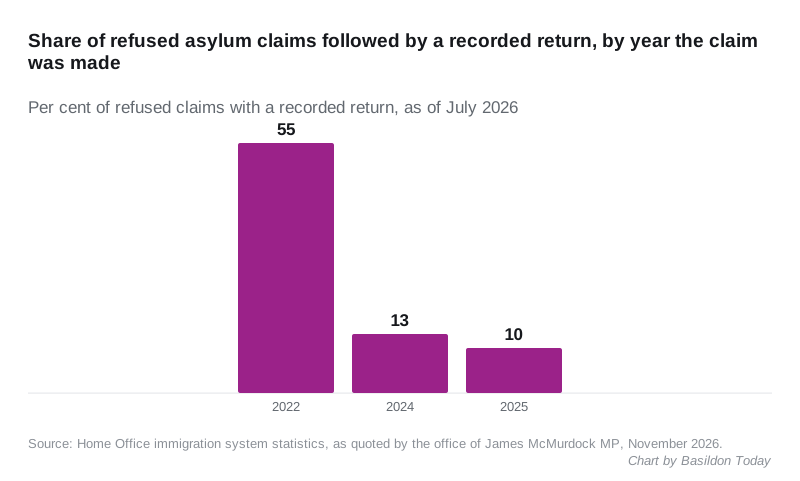
James McMurdock says only about 10% of refused 2025 asylum claims have led to a recorded return, down from 55% in 2022. Updated November 2026.
Only about one in ten asylum claims made in 2025 and refused has so far been followed by a recorded return, according to Home Office figures cited by South Basildon and East Thurrock MP James McMurdock, who says the asylum system is failing to act on its own decisions.
The figures, from the government’s immigration system statistics data tables, show that as of July 2026 around 3,300 returns had been recorded in relation to claims made in 2025. Around 34,300 claims from that year had a refusal as their latest recorded outcome.
What the numbers show
His office set the 2025 figure against earlier years. The share of refused claims followed by a recorded return was 55% for claims made in 2022, 13% for 2024 and 10% for 2025.
Over the longer run, 241,200 asylum applications made between 2007 and 2025 were refused, and 95,000 returns have been made.
The comparison is not a clean one, and the MP’s office says so. Some of the people counted as returned may have left the UK before their claim was decided, or been removed for other reasons, so not every return belongs to a refused claim. Some refusals are also still going through appeals or other legal challenges.
“A refusal cannot simply become the beginning of years of delay”
Mr McMurdock said: “People rightly expect that when an asylum claim has been properly considered and refused, the system should be able to act promptly and effectively, subject to any outstanding legal appeals.
“These figures raise serious questions about the effectiveness of the asylum system. While the Government must ensure that genuine claims and legal rights are respected, a refusal cannot simply become the beginning of years of delay and uncertainty.
“We need a system that makes decisions promptly, deals with appeals efficiently and ensures that those who do not have a right to remain in the UK are returned in a timely manner.”
90,000 appeals waiting
The same statistics show the queue at the appeal stage. At the end of June 2026 there were around 90,000 outstanding asylum appeals, with an average wait of about 72 weeks.
Further back in the process, 32,400 asylum applications were waiting for an initial decision at the end of June. Of those, 26% had been waiting for more than 12 months.
“An appeal backlog of around 90,000 cases, with people waiting an average of 72 weeks, is unacceptable,” Mr McMurdock said. “Delays undermine public confidence and make it much harder to maintain an orderly and effective system.
“The Government must urgently address the backlog, improve the speed of decisions and appeals and provide clear reporting on how many people whose claims are refused are ultimately returned.”
What it means for you
The figures are national: the release does not break them down for Basildon or Thurrock. What Mr McMurdock is asking the government for is faster decisions, quicker appeals and regular published figures on how many refused claimants are eventually returned.
The Home Office publishes the figures in its asylum data tables, and the 2025 numbers were recorded as of July 2026, so they will move as more of those claims are concluded.
Have your say